Is the driver who was backing up always at fault?
Why the backing driver usually gets the blame
When you drive in reverse, you can see less and other people don't expect you to move toward them. That's why state laws put the duty on the backing driver. Iowa's traffic code is a good example: a driver may not back up until the vehicle can be backed with reasonable safety, and must yield to approaching traffic that is close enough to be an immediate hazard. Many other states have similar rules.
Driver handbooks say the same thing in plain words. Rhode Island's driver manual tells drivers to look over their right shoulder while backing and to keep checking all mirrors so no vehicles, people, or objects are in the way. If you skipped those steps and hit someone, an insurance adjuster will likely find you mostly at fault.
When the other driver can share the blame
Backing up does not make you automatically 100% at fault. Adjusters look at what each driver did. Fault may be shared when:
- The other car was going too fast. A driver racing down a parking lot lane may not give you a fair chance to see them.
- Both cars were backing up. When two drivers reverse into each other, both had the same duty to check behind them, so fault is often split.
- The other driver was not paying attention. Texting, ignoring lot arrows, or cutting across empty spaces can all count against them.
- You had already stopped. If you stopped in reverse and the other car then hit you, the facts may point at them instead.
On the other hand, if you backed into a parked car with no one in it, you will almost always be found at fault. See our guide on parking lot accidents for more examples.
Ask about your situation
Type your question the way you'd say it. Free, no sign-up, and we never ask for your name.
Find help near youHow your state's fault rules change the result
Most states use some form of comparative negligence. That means each driver gets a percentage of the blame, and your payment can be cut by your share. The Illinois Department of Insurance gives this example: if the other driver is 80% at fault and you are 20% at fault, you can still collect, but their insurer may only pay 80% of your damages.
States handle shared fault differently. Some cut off recovery once you pass a certain share of blame, and a few are stricter than that. In no-fault states, your own insurance pays for some injury costs no matter who caused the crash, but fault still matters for car damage. Check your state's rules or ask your insurer.
What to do after a backing accident
- Stop, check for injuries, and move to safety if you can.
- Take photos of both cars, where they ended up, lot signs, arrows, and any skid marks.
- Get names, phone numbers, and insurance details. Ask witnesses for their contact information.
- Look for security cameras at nearby stores and ask how long they keep the video.
- Report the crash to your insurance company and stick to the facts. Don't guess or admit fault at the scene.
If the other driver tells a different story later, read what to do if the other driver lies about fault.
Getting your car fixed
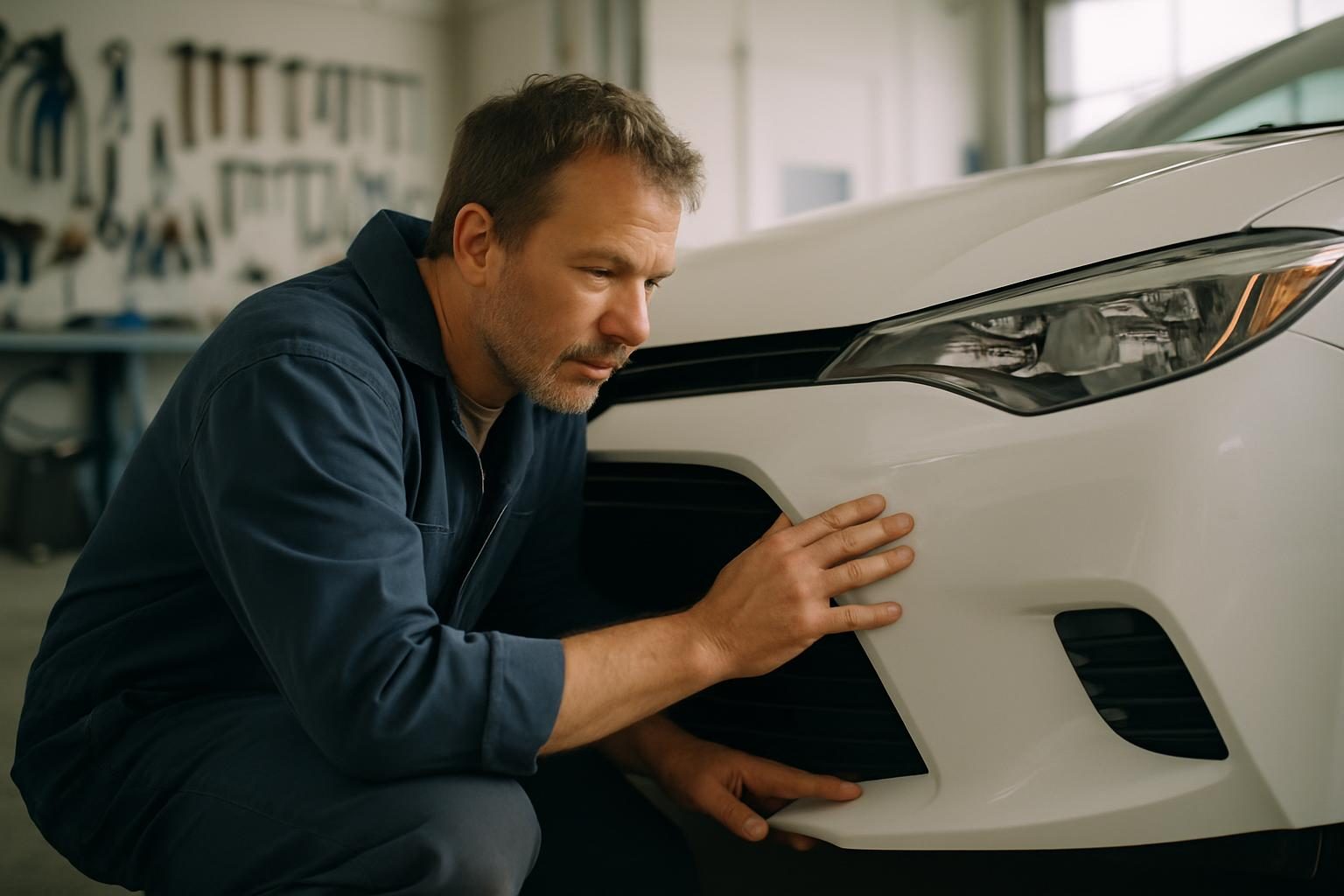
Even a slow backing bump can crack bumper sensors and backup cameras, which can cost more to repair than you'd expect. Get a written estimate before you agree to settle, and remember that in many states you can choose your own body shop. accidents.si can show body shops and towing near your ZIP code.
Common questions
If two cars back into each other, who is at fault?
Often both drivers share the blame, since each had a duty to check behind them before moving. The exact split depends on the evidence, such as who started moving first and photos or video.
Does the police report decide fault?
Not by itself. Insurers use the police report along with photos, statements, and damage patterns to make their own fault decision. Many minor parking lot crashes don't get a police report at all.
Can I dispute a 100% fault decision for backing up?
Yes. Ask your insurer to explain the decision in writing and send any evidence that shows the other driver was speeding or careless, like video or witness names.
Will a backing accident raise my insurance rates?
It might if you are found mostly at fault, but rules and pricing vary by insurer and state. Ask your insurer how they treat at-fault claims.